en
en de
de Hefei Super Electronics Co., Ltd.
What Are You Looking For?

Neodymium magnets are known as the strongest permanent magnets available today. They are widely used in industrial equipment, motors, sensors, magnetic assemblies, electronics, and consumer products. Although these magnets offer exceptional magnetic strength, many users are concerned about one question: Can neodymium magnets lose their magnetism?
The answer is yes. While neodymium magnets are designed to maintain their magnetic properties for many years, certain conditions can lead to partial or permanent demagnetization. Understanding these causes can help users maximize magnet performance and service life.
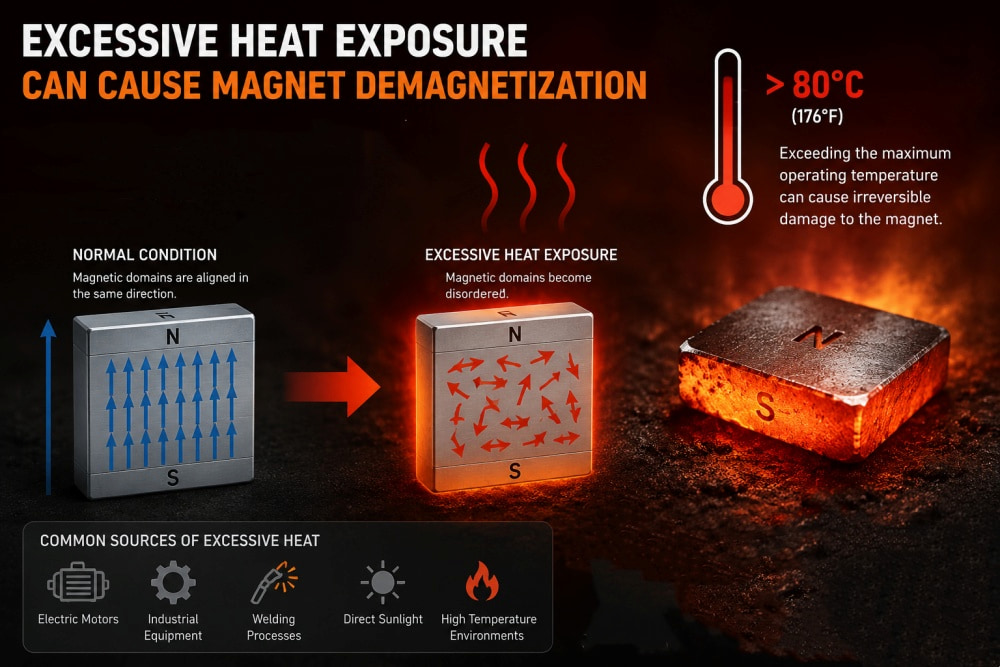
♦ Excessive Heat Exposure ♦
High temperature is one of the most common reasons for magnet demagnetization. Every neodymium magnet grade has a maximum operating temperature. Standard N35-N52 magnets typically operate safely up to 80°C (176°F). When exposed to temperatures beyond their rated limits, the internal magnetic domains begin to lose alignment.
For applications involving motors, generators, or high-temperature environments, high-temperature grades such as AH, SH, UH, EH, or TH should be selected to ensure stable magnetic performance.
♦ Strong Opposing Magnetic Fields ♦
Neodymium magnets can lose strength when exposed to a powerful magnetic field oriented in the opposite direction of their original magnetization. This can occur in industrial machinery, testing equipment, or magnetic assemblies where magnets interact with each other under extreme conditions.
♦ Corrosion And Surface Damage ♦
Rare earth magnets contain iron, which is vulnerable to corrosion if the protective coating is damaged. Rust can gradually weaken the material and negatively impact magnetic performance.
To improve durability, Sintered NdFeB magnets manufacturers commonly apply nickel, zinc, epoxy, gold, or other protective coatings. For outdoor or humid applications, epoxy-coated magnets often provide superior corrosion resistance.
♦ Improper Storage Conditions ♦
Incorrect storage can gradually affect magnet performance. Storing magnets near high temperatures, moisture, corrosive chemicals, or strong external magnetic fields May contribute to magnetic degradation over time.
♦ Physical Impact and Mechanical Shock ♦
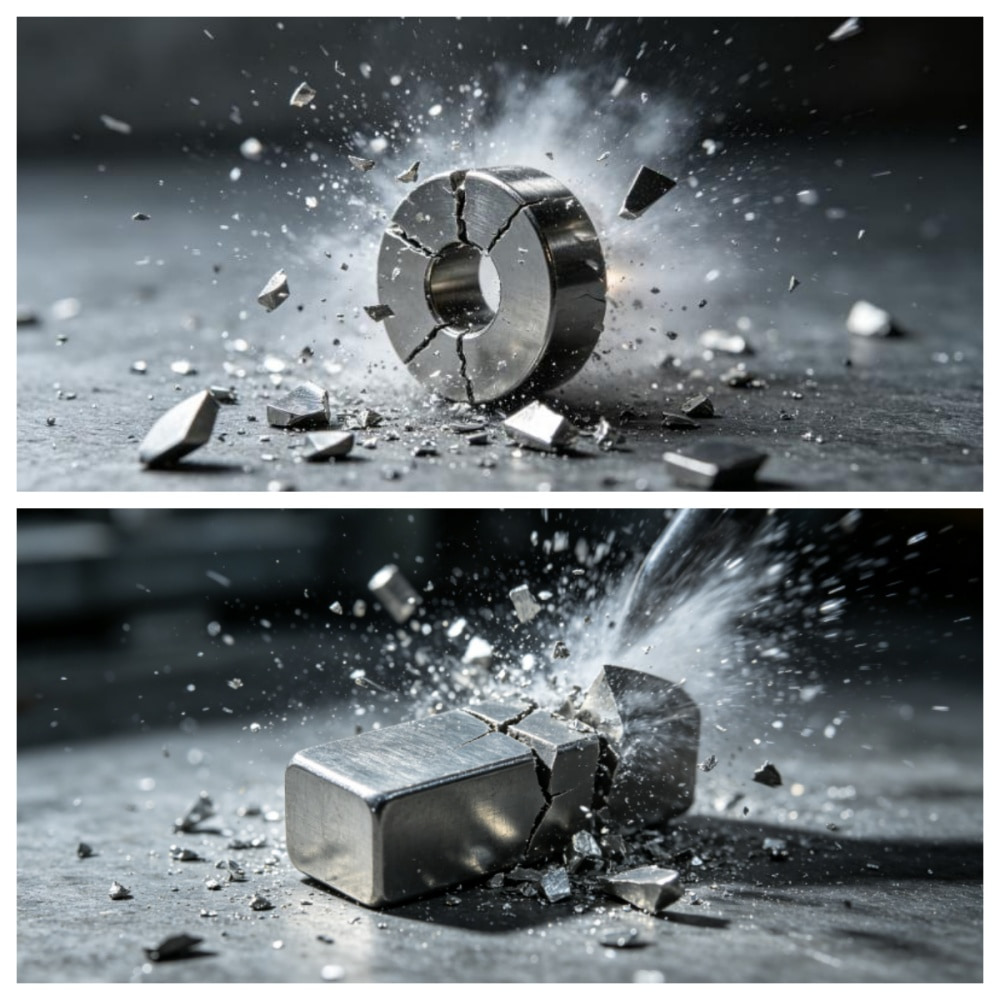
Although neodymium magnets are extremely strong magnetically, they are relatively brittle. Repeated dropping, collision, vibration, or mechanical stress can damage the internal crystal structure and affect magnetic performance.
In severe cases, magnets may crack or chip, resulting in a reduction of magnetic force. Protective coatings and proper handling practices are recommended to prevent physical damage.
♦ Manufacturing Defects or Low-Quality Materials♦
Not all neodymium magnets are manufactured to the same standards. Poor-quality raw materials, inadequate magnetization processes, or inconsistent production controls May result in weaker magnetic performance and faster degradation.
Conclusion:
Neodymium iron boron magnets are highly durable and can retain most of their magnetic strength for decades when used correctly. However, excessive heat, strong opposing magnetic fields, physical damage, corrosion, improper storage, and poor manufacturing quality can all contribute to demagnetization. Understanding these factors allow you to choose the right magnet and achieve optimal performance in industrial and commercial applications.



 IPv6 network supported
Hi! Click one of our members below to chat on