en
en de
de Hefei Super Electronics Co., Ltd.
What Are You Looking For?

As product designs become more compact and user-friendly, embedding neodymium magnets into plastic components has become a popular solution across industries. From consumer electronics and retail displays to educational products and office accessories, magnetic assemblies offer a clean, reliable, and tool-free method of attachment. One common example is magnetic push pins, which combine durable plastic housings with powerful neodymium magnets to securely hold documents, notes, and lightweight objects on magnetic surfaces.

While the concept appears simple, successful magnet integration requires careful consideration during the design and manufacturing stages. Improper embedding methods can lead to weak holding force, assembly failures, or reduced product lifespan.
One of the most important factors is selecting the correct magnet size and shape. Engineers should evaluate the required holding force, available installation space, and intended application before choosing a magnet. In magnetic push pins, compact disc magnets are often preferred because they provide strong magnetic performance while fitting neatly inside small plastic bodies.
Proper magnet positioning is equally critical. The magnet should be placed as close as possible to the contact surface while maintaining sufficient plastic thickness to prevent cracking or exposure. Excessive plastic between the magnet and the target surface can significantly reduce effective magnetic force.
Another key consideration is assembly method. Manufacturers typically use press-fitting, adhesive bonding, insert molding, or ultrasonic welding to secure magnets inside plastic parts. For reusable neodymium magnetic tools, secure fixation is crucial to prevent the magnet from shifting during long-term use.
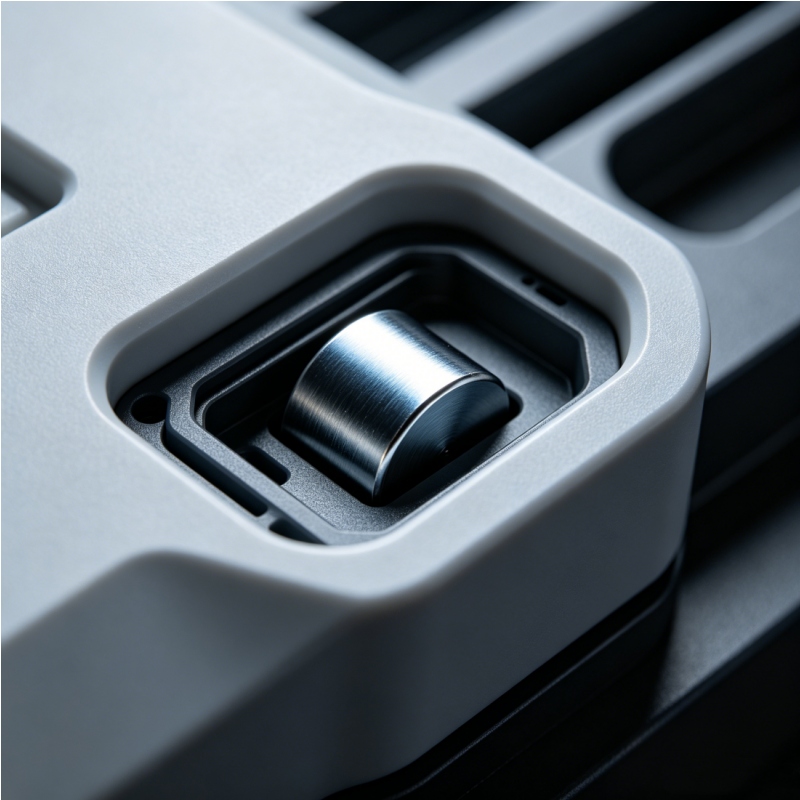
Temperature management during production should not be overlooked. Certain plastic molding processes involve elevated temperatures that may affect magnetic performance if unsuitable magnets are selected. Product designers should ensure that the chosen magnets are compatible with the processing conditions used during manufacturing.
Corrosion protection is another important factor. Although embedded magnets are partially protected by the surrounding plastic structure, moisture can still enter through small gaps or damaged areas over time. Selecting appropriate coatings helps improve durability and ensures stable performance in various environments.
Consistency is especially important for large-scale production. Tight dimensional tolerances for both magnets and plastic cavities help achieve reliable assembly quality and repeatable performance. This is particularly valuable for office products, promotional items, and industrial accessories where uniform holding strength is expected.
In conclusion, embedding neodymium magnets into plastic parts requires more than simply inserting a magnet into a housing. Proper magnet selection, positioning, assembly methods, environmental protection, and manufacturing control all contribute to product reliability. By following these best practices, manufacturers can create durable magnetic products such as magnetic push pins that deliver consistent performance and long-term customer satisfaction.



 IPv6 network supported
Hi! Click one of our members below to chat on