en
en de
de Hefei Super Electronics Co., Ltd.
What Are You Looking For?

When selecting industrial neodymium magnets, many buyers focus primarily on diameter or overall size. However, magnet thickness is another crucial factor that significantly impacts attraction. Understanding how thickness affects magnetic properties helps engineers and buyers select the most suitable magnet for a specific application.
Neodymium magnets generate magnetism through the arrangement of magnetic domains within the material. The thicker the magnet, the more magnetic material can be used to support the internal magnetic field. Therefore, thicker magnets typically generate a stronger magnetic flux at the surface, directly enhancing the magnet's attraction to ferromagnetic objects such as steel.
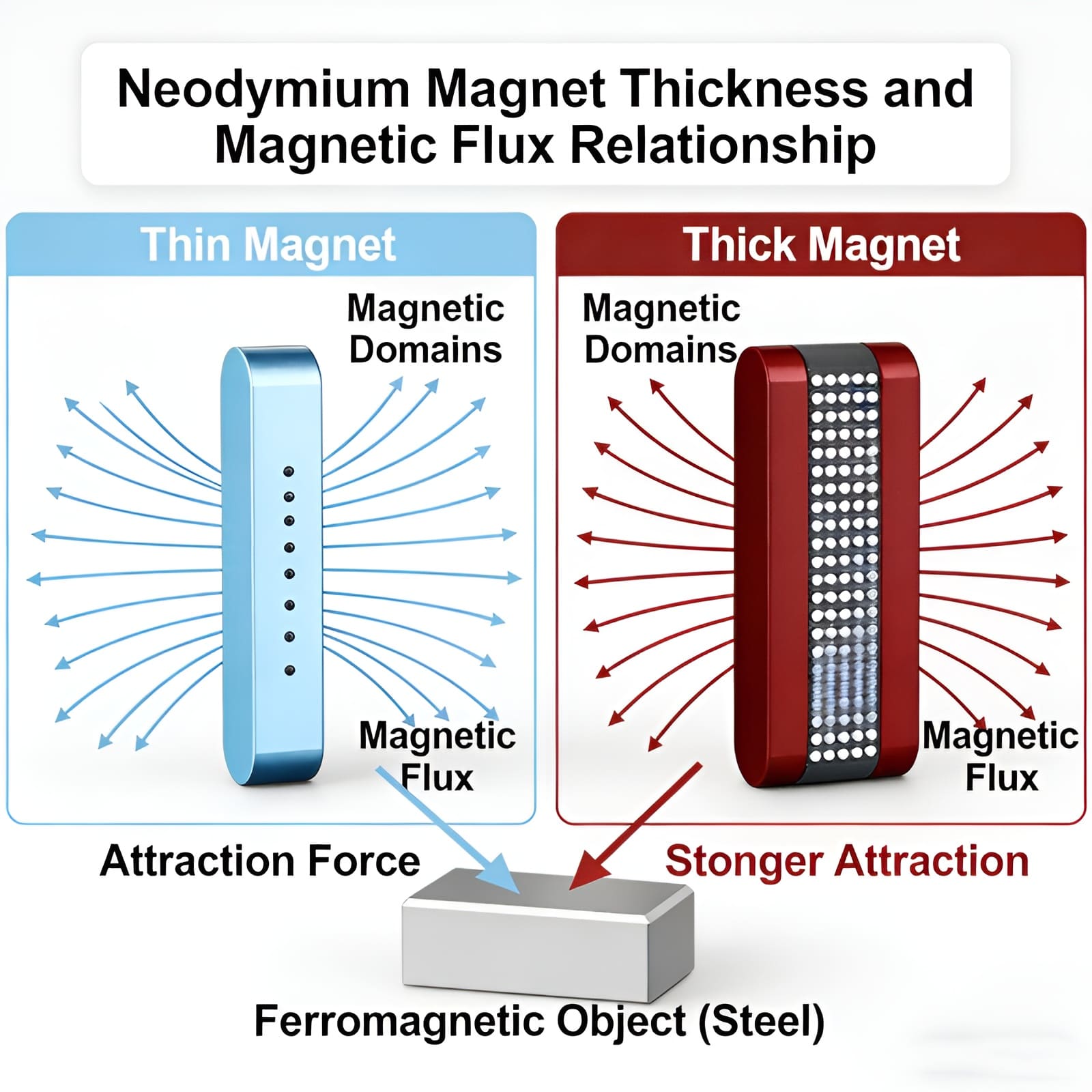
In fact, increasing the magnet's thickness allows the magnetic field to extend further from the surface. Thin magnets may appear strong over short distances, but their magnetic field decays rapidly. Thicker magnets, on the other hand, maintain a more stable magnetic field, providing a stronger attraction even with small gaps between the magnet and the target surface. This makes magnet thickness particularly important in applications with coatings, paint layers, or slight air gaps.
For example, pot neodymium magnets are often used in mounting systems, magnetic hooks, or magnetic bases to achieve higher load-bearing capacity. In industrial equipment or automation devices, thicker magnets ensure reliable positioning or holding force even under vibration or movement. Similarly, magnetic components used in motors, sensors, or electronic devices may require precise control of magnet thickness to optimize the magnetic circuit.

However, thicker magnets do not always mean better performance. The holding force of a magnet is also affected by factors such as diameter, magnetic class, magnetization direction, and contact surface quality. If the steel surface is thin or uneven, the additional magnetic force from a thicker magnet may not be fully utilized. In some cases, increasing the magnet's diameter may be more effective than simply increasing its thickness.
Another important consideration is cost-effectiveness. Because neodymium magnets are made of rare-earth materials, thicker magnets require more raw materials, thus increasing production costs. Engineers typically weigh the thickness and diameter of the magnet to achieve the desired attraction while controlling material usage and overall project cost.
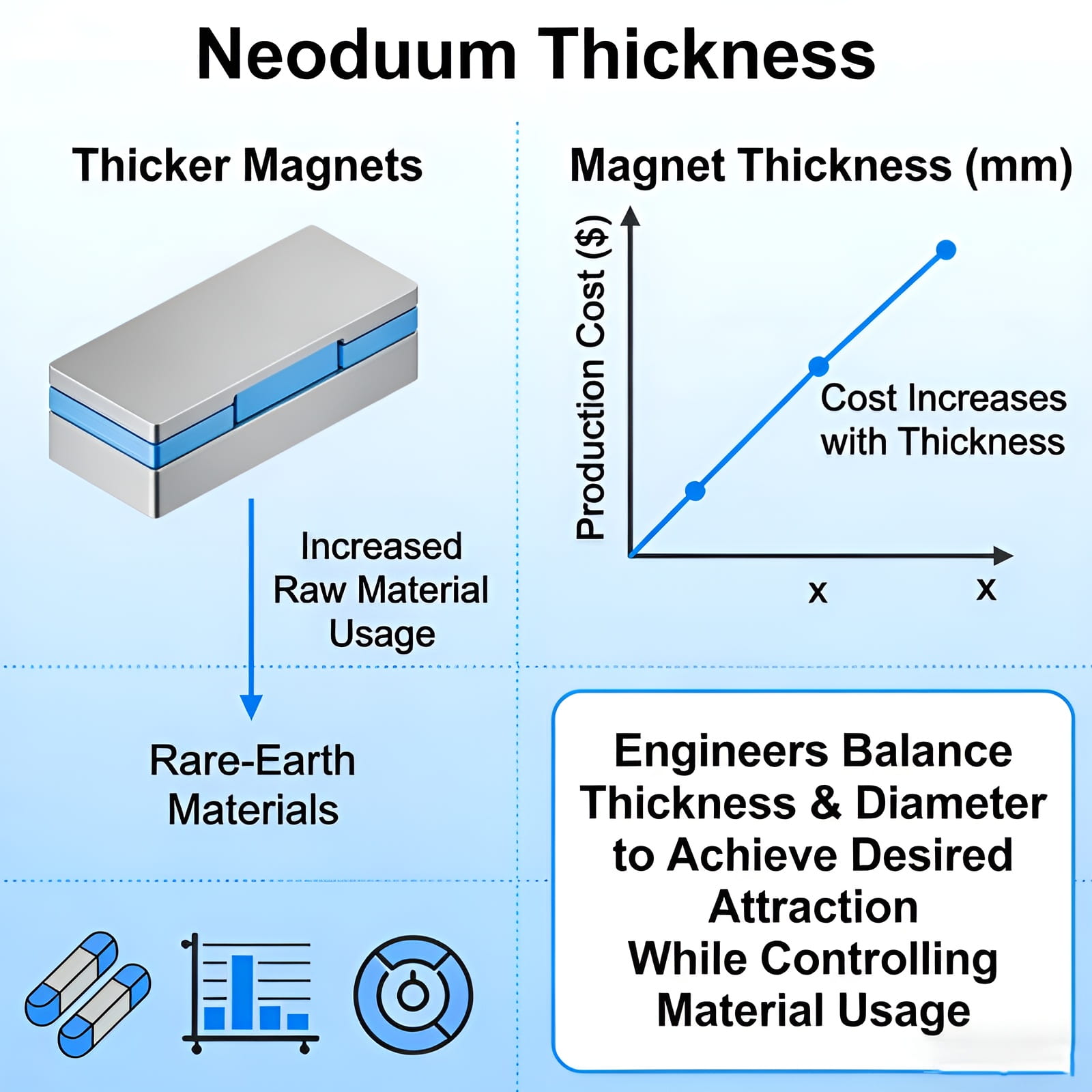
In conclusion, magnet thickness plays a crucial role in determining attraction force and magnetic field stability. Thicker magnets typically offer stronger and more reliable attraction, especially in applications with small gaps or coatings. By carefully balancing magnet thickness with other design parameters, users can select strong neodymium magnets with the best performance to meet their specific needs.



 IPv6 network supported
Hi! Click one of our members below to chat on