en
en de
de Hefei Super Electronics Co., Ltd.
What Are You Looking For?

In recent years, the pricing of neodymium magnets has become increasingly sensitive to fluctuations in raw material markets. Unlike many conventional industrial components, NdFeB permanent magnets rely heavily on rare earth elements such as neodymium and praseodymium (NdPr), making their cost structure closely tied to upstream material dynamics.
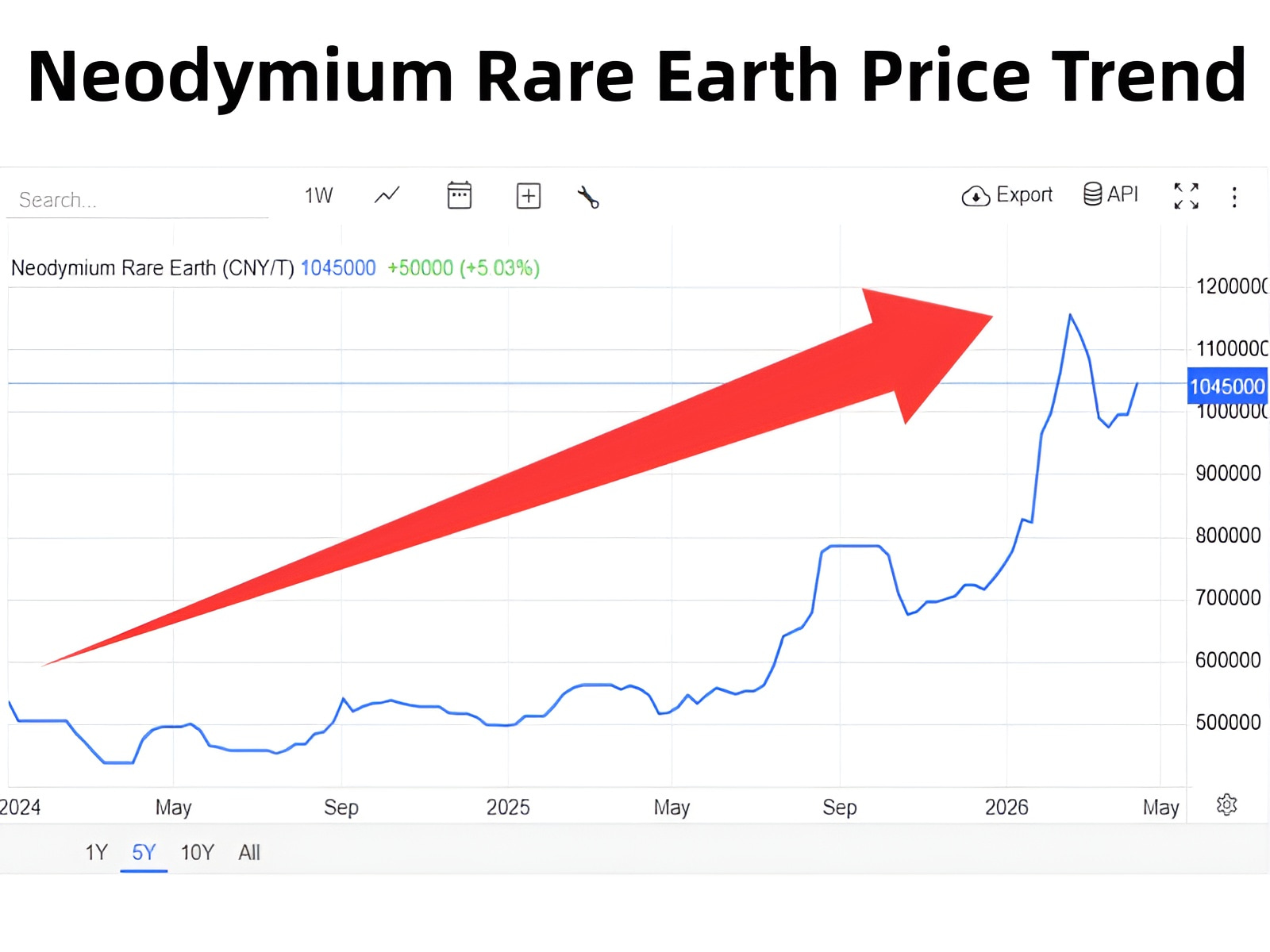
One of the most direct influences comes from the price volatility of rare earth elements themselves. Neodymium prices, for example, have shown significant year-on-year increases and remain highly sensitive to supply-demand imbalances. Recent data indicates that neodymium prices are still substantially higher compared to previous years, reflecting ongoing pressure in the raw material market. This volatility is immediately reflected in magnet production costs, as raw materials account for a major proportion of total manufacturing expenses.
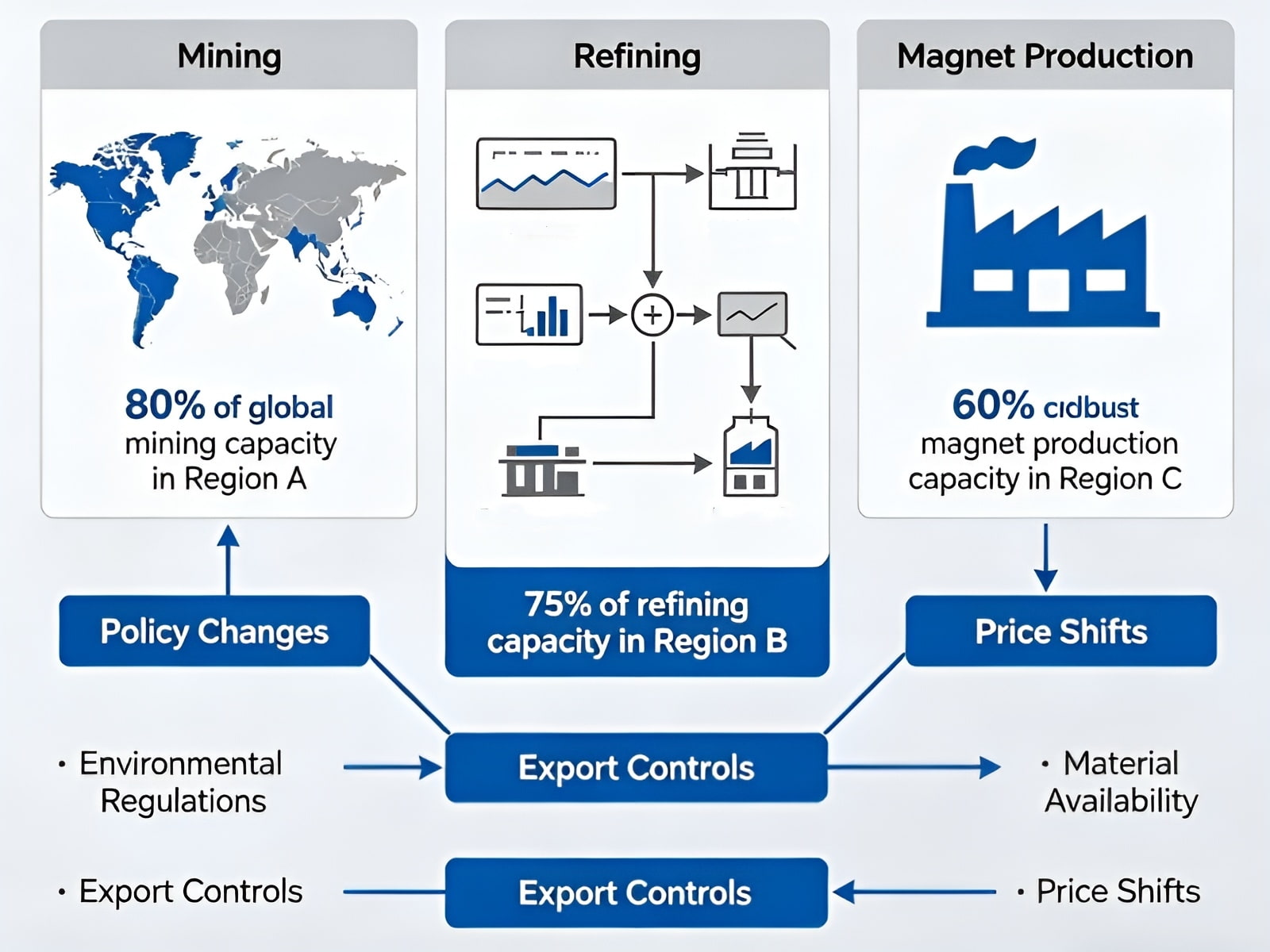
Beyond price levels, supply concentration plays a crucial role. The global rare earth value chain is highly centralized, with a significant portion of mining, refining, and magnet production capacity concentrated in a limited number of regions. This structural characteristic means that policy changes, environmental regulations, or export controls can rapidly influence material availability, leading to sudden price shifts.
Demand growth from emerging industries further intensifies this situation. The expansion of electric vehicles, renewable energy systems, and automation technologies has sharply increased the consumption of high powerful neodymium magnets. As these industries scale up, competition for raw materials becomes stronger, pushing prices upward and increasing procurement pressure across the supply chain.
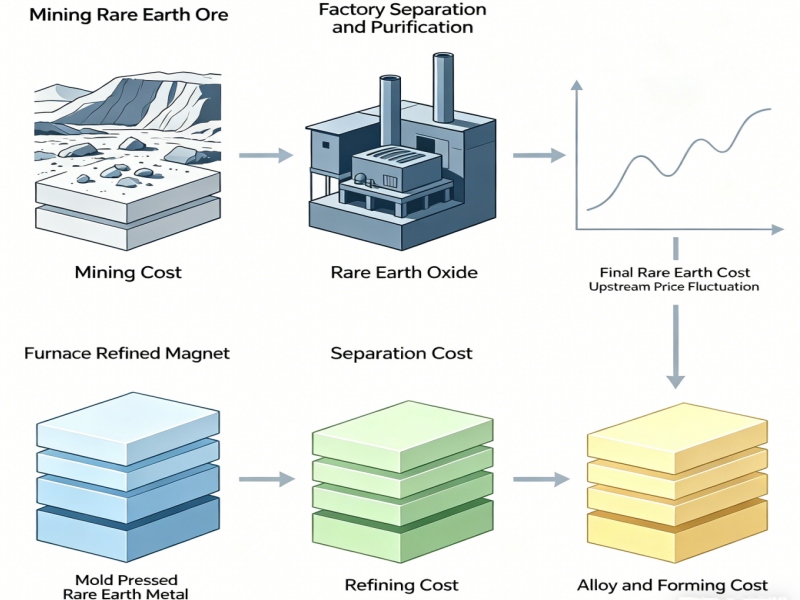
Another important factor is the multi-stage processing cost embedded in rare earth materials. From mining and separation to metal refining and alloy production, each step adds value and cost before the material is transformed into finished NdFeB magnets. This layered production process amplifies the impact of any upstream price change, making final magnet pricing more sensitive than many buyers expect.
In addition, market uncertainty encourages cautious procurement behavior. Buyers increasingly prioritize stable supply and predictable lead times rather than simply focusing on the lowest price. This shift reflects a broader understanding that price fluctuations are not isolated events, but part of a complex and interconnected supply chain.
From a practical perspective, understanding how raw material prices influence magnet costs allows buyers to make more informed decisions. Early order planning, flexible sourcing strategies, and clear communication with manufacturers can help mitigate the risks associated with price volatility.
In conclusion, the cost of neodymium magnets is not determined by manufacturing alone, but by a combination of rare earth raw material pricing, supply chain structure, and global demand trends. As the market continues to evolve, staying informed about these underlying factors will be essential for maintaining cost efficiency and supply stability.



 IPv6 network supported
Hi! Click one of our members below to chat on