en
en de
de Hefei Super Electronics Co., Ltd.
What Are You Looking For?

As industries worldwide move towards carbon neutrality and stricter environmental compliance, the recycling of neodymium NdFeB magnets has transitioned from a niche practice to a strategic priority. NdFeB magnets are widely used across various industries, consuming significant amounts of rare earth elements such as Nd, Pr, Dy, and Tb. With increasing supply risks and increasingly stringent sustainability standards, manufacturers throughout the supply chain are accelerating the recycling and reuse of these valuable materials.
Why is recycling developing so rapidly?
For magnet manufacturers, several industry pressures are converging:
The EU, the US, and Japan are now requiring reduced carbon footprints and traceability of critical materials. Customers increasingly expect the use of recycled materials in magnet components, particularly in electric vehicles and motor applications. This directly impacts the purchasing decisions of B2B buyers.
Processes such as cutting, grinding, polishing, and coating generate substantial amounts of waste—was previously considered waste. Today, these materials have become a high-value source of rare earth recycling.
Recycling rare earth materials helps reduce dependence on volatile raw material markets, thus providing manufacturers with more stable prices and supply.


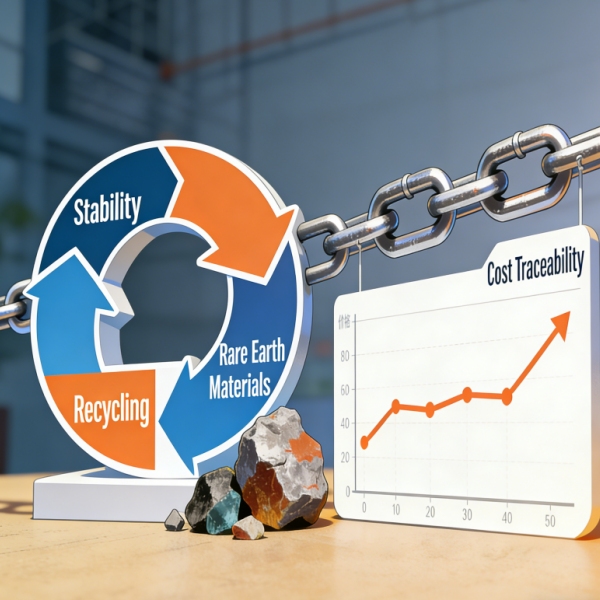
New Recycling Technologies Focus on Factory-Originated NdFeB Waste
Unlike traditional methods that rely solely on discarded electronics or hydrogen explosions, the new approach centers on closed-loop recycling within the Ndfeb magnet factory:
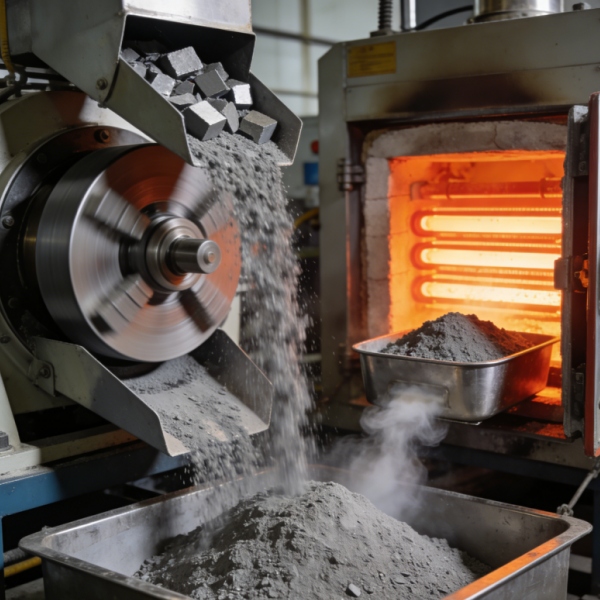
Coatings are removed from processing waste, separating high-purity rare earth oxides.
Uncontaminated debris can be re-ground and sintered, reducing energy consumption and simplifying the reprocessing process.
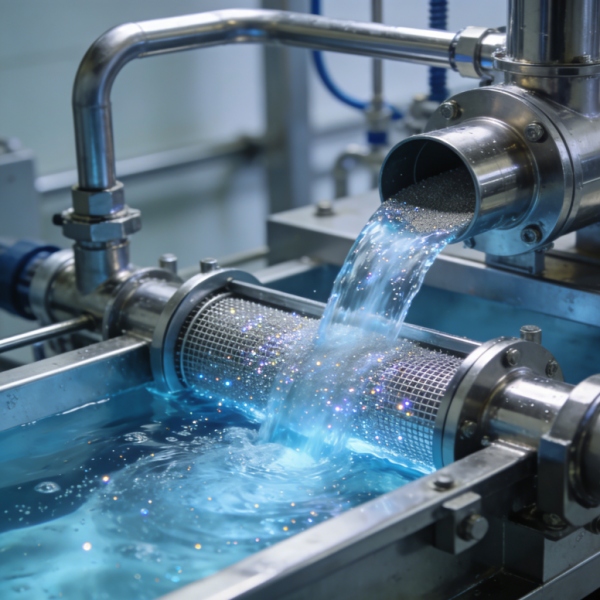
Advanced filtration technologies enable the extraction of ultrafine rare earth particles from processing wastewater—particles previously unrecoverable.
These methods produce high-quality recycled powder that can be reused during sintering without affecting magnet performance, meeting the needs of industrial customers.
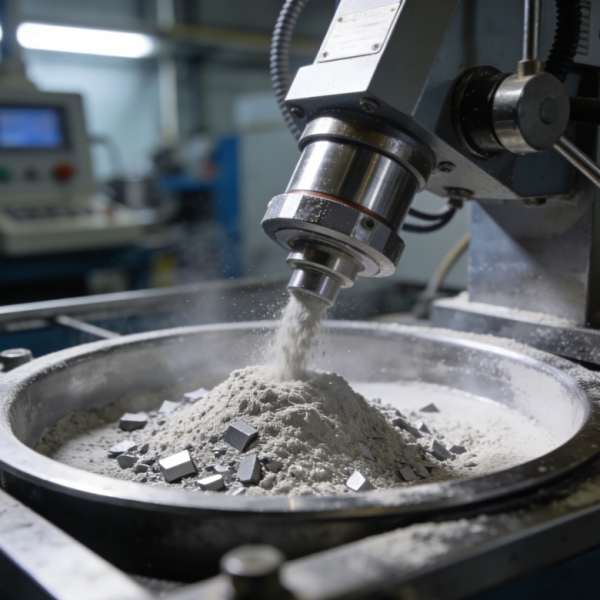
For NdFeB magnet suppliers, recycling is no longer just an environmental responsibility, but a competitive advantage. Integrating recycled rare earth elements into the production process helps stabilize raw material costs, ensure long-term supply, and meet global sustainability requirements. With increasing pressure for sustainability, NdFeB recycling will play an increasingly important role in magnet manufacturing, providing a more resilient and efficient supply chain for global B2B buyers.



 IPv6 network supported
Hi! Click one of our members below to chat on