en
en de
de Hefei Super Electronics Co., Ltd.
What Are You Looking For?

In recent years, neodymium magnetic block toys have quietly evolved from children's educational toys into a widely used professional tool in creative studios worldwide. As design teams seek faster and more flexible ways to visualize concepts, these modular magnetic blocks have become the preferred medium for early concept development, spatial testing, and rapid model iteration.
Unlike traditional foam boards or clay models, magnetic cubes provide a stable, grid-like building system that allows designers to transform abstract ideas into tangible, scalable structures in minutes. Each cube maintains the same size, providing a uniform geometry that supports precise alignment, symmetry testing, and rapid adjustments during collaborative modeling.
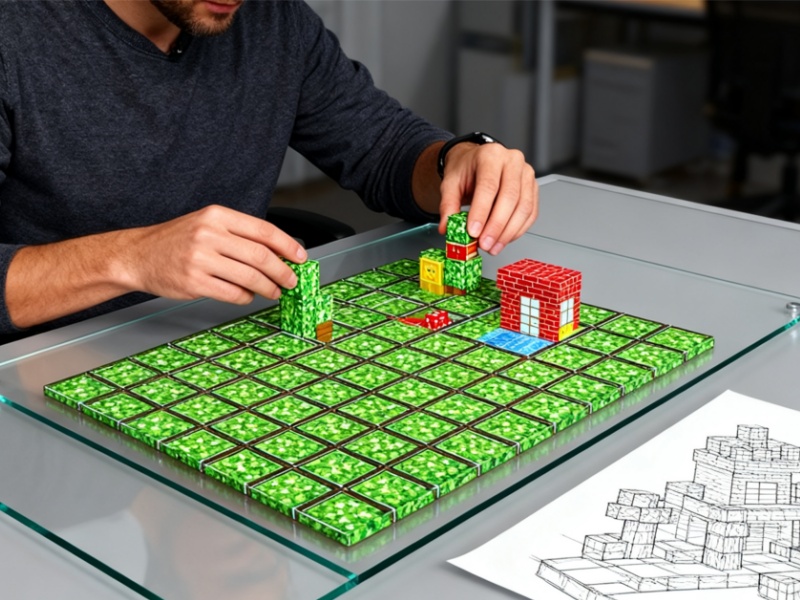
Creative studios in product design, architecture, toy development, and digital media have integrated magnetic cube kits into their workflows. The reason is simple: magnetic cubes act as a physical "mind canvas," helping teams externalize ideas before turning to CAD software or 3D rendering tools. When concepts can be hand-shaped, designers are often able to discover relationships or proportions that might not be readily apparent on a screen.
A key advantage of magnetic building cubes lies in their intuitive, grid-like visual language. Because each cube snaps into place with consistent spacing, teams can easily test volume, scale, and structural balance without the need for specialized tools. This is especially important for architectural concept modeling, where creatives can use these cubes to sketch architectural designs, interior layouts, or landscape compositions in a modular, iterative manner.
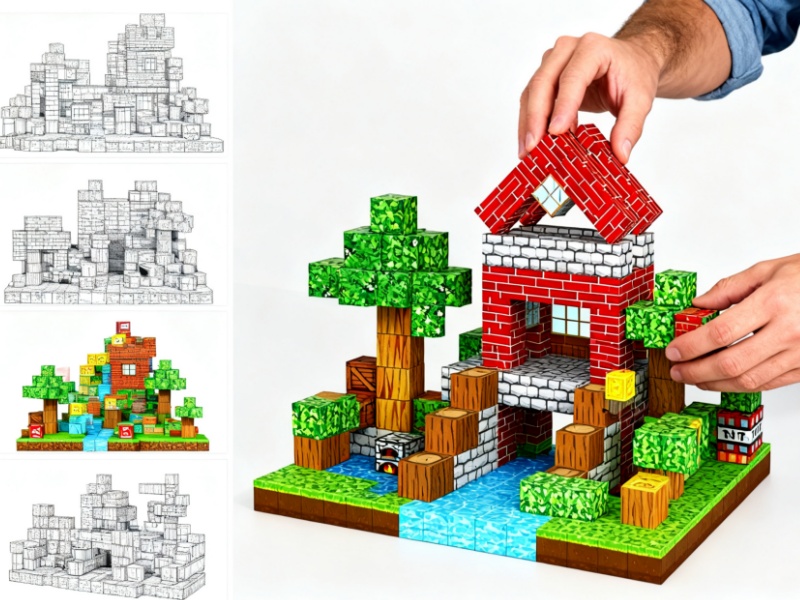
Product developers also benefit from magnetic cube modeling. Many studios use cubes to explore ergonomics, mechanical clearances, and component distribution by assembling “modular models” that simulate external dimensions. These physical models help stakeholders assess usability and dimensional relationships before investing resources in creating detailed prototypes.
Meanwhile, digital artists and animation studios also use magnetic cubes as physical models for scene settings and stage construction. These cubes allow teams to explore camera angles, lighting effects, or spatial interactions in real-world environments before translating concepts into digital software.
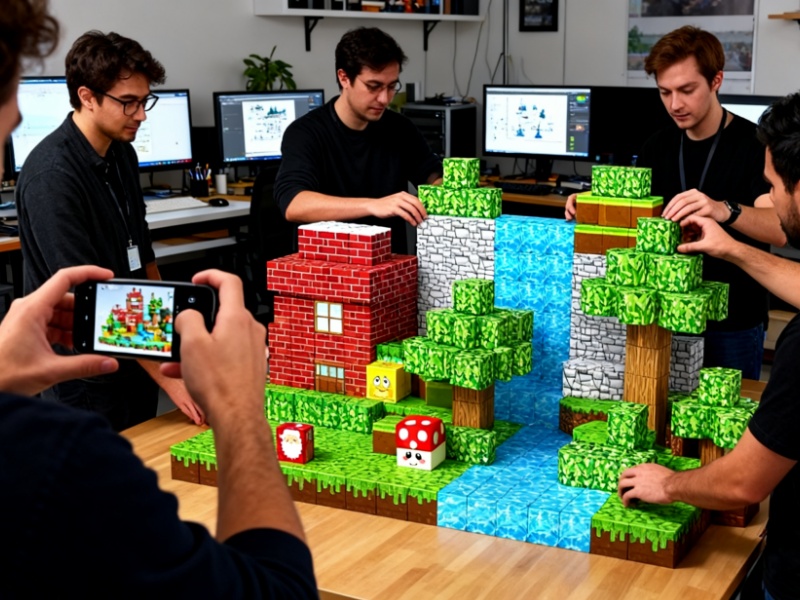
Reusable magnetic cube blocks also boast excellent durability, another practical advantage. Teams can repeatedly disassemble and rebuild the structure without wear and tear, making them ideal for daily, high-intensity brainstorming sessions.
As the creative industries increasingly emphasize speed, collaboration, and physical interaction in the early design stages, magnetic cubes are no longer just modeling tools; they represent a shift in tactile thinking in modern innovation. Their simplicity, modularity, and versatility suggest they will continue to play a vital role in concept modeling conferences at studios worldwide.



 IPv6 network supported
Hi! Click one of our members below to chat on